
Property Purchase Challenges for Americans in France: A Comprehensive Analysis
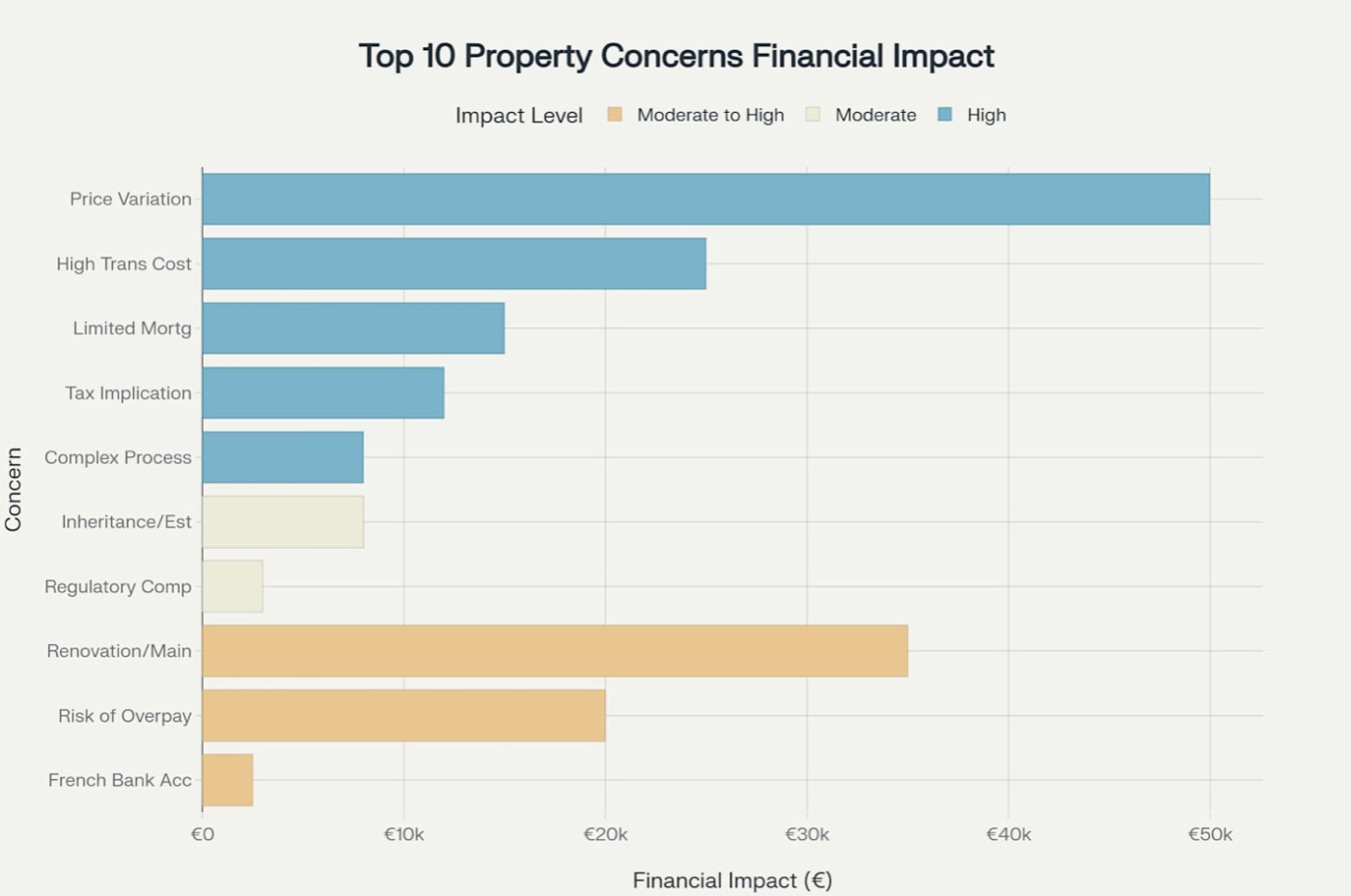
The dream of buying property in France has captivated Americans for decades, driven by the country's rich cultural heritage, excellent quality of life, and diverse landscapes ranging from Parisian sophistication to Provençal charm. However, beneath the romantic appeal lies a complex web of financial, legal, and bureaucratic challenges that can significantly impact the property acquisition process. This comprehensive analysis examines the multifaceted obstacles facing American buyers when pursuing French real estate investments, incorporating insights from recent market data and regulatory changes through 2025.
The Scale of the Challenge
American property buyers now account for over 3% of all overseas buyers of French property, representing a significant portion of the international real estate market. For Americans, often drawing from established career earnings or investment portfolios, the stakes are particularly high. These buyers typically possess the financial resources and analytical skills to navigate complex international transactions, yet they face unique challenges stemming from their American citizenship and unfamiliarity with French real estate systems.
The demographic's typical profile includes professionals seeking lifestyle changes, remote workers taking advantage of France retirement visa opportunities, and investors attracted by the country's stable property market. However, their journey from initial interest to property ownership involves navigating a labyrinthine process that can take anywhere from six months to several years to complete.
Financial Barriers and Hidden Costs
Transaction Cost Complexity
The most immediate shock for Americans accustomed to U.S. real estate transactions comes from France's high transaction costs. Unlike the relatively straightforward closing costs in America, French property purchases involve multiple layers of fees that can total 7-10% of the purchase price. Notaire fees France typically range from 7-8% of the property value, while transfer taxes add another 5.8% for existing properties and 0.7% plus VAT for new builds.
For a €300,000 property—a modest purchase in many French markets—these costs can total €20,000-€30,000, representing a substantial unexpected expense that can strain budgets. Americans, often operating with carefully planned investment portfolios, may find these additional costs disruptive to their financial planning.
Mortgage Accessibility Crisis
The challenge of securing French mortgage for Americans has intensified due to FATCA (Foreign Account Tax Compliance Act) regulations. French banks have become increasingly reluctant to lend to American citizens due to the compliance burdens imposed by U.S. tax reporting requirements. This reluctance manifests in several ways: stricter eligibility criteria requiring 25-30% down payments compared to 10-20% for EU residents, loan-to-value ratios capped at 50-75% of property value, and debt-to-income ratios that must remain below 33-35%.
Interest rates for non-resident Americans currently range from 3.1-3.5% for 15-25 year fixed-rate mortgages, which, while competitive compared to U.S. rates, come with processing times of 2-4 months and extensive documentation requirements. The question "can US citizens get a mortgage in France?" has become increasingly complex, with many buyers forced into cash purchases that may not align with their investment strategies.
Banking and Currency Challenges
Opening a French bank account represents another significant hurdle in the property acquisition process. FATCA regulations make French banks hesitant to serve American clients, requiring extensive documentation including proof of address, income verification, and tax status declarations. For Americans managing the purchase remotely or before establishing residency, this creates a circular problem: banks require proof of address to open accounts, but property purchases require French bank accounts.
The banking challenge extends beyond initial setup to ongoing maintenance. American account holders face continued scrutiny and reporting requirements that some French banks find burdensome, leading to account closures or service restrictions. Currency exchange services like Wise can provide temporary solutions for initial payments, but long-term banking relationships remain essential for property ownership, utility payments, and tax obligations.
Legal and Procedural Complexities
The French Purchase Process
The complex purchase process in France differs significantly from American real estate transactions. The French system involves multiple mandatory stages: the preliminary contract (compromis de vente), a 10-day cooling-off period, mandatory property diagnostics covering energy efficiency, asbestos, lead, and termite assessments, and final deed signing with a notaire.
This process typically takes 3-6 months to complete, during which buyers must navigate language barriers and unfamiliar legal terminology. The absence of a Multiple Listing Service (MLS) equivalent means American buyers must work with multiple agencies and deal directly with private sellers, who comprise approximately 20% of the market. This fragmented approach can be overwhelming for buyers accustomed to the centralized systems common in U.S. markets.
Regulatory Compliance Requirements
Property ownership in France triggers various compliance obligations that can surprise American buyers. Mandatory diagnostics cost €100-€500 per report and must be updated regularly. Energy performance certificates (DPE ratings) have become particularly important, with new regulations banning the rental of properties with G or F ratings by 2028.
For college-educated Americans considering rental income as part of their investment strategy, these regulations can significantly impact property values and usability. Properties requiring energy efficiency upgrades may need investments of €500-€2,000 per square meter to meet new standards, adding substantial costs to the initial purchase price.
Regional Market Variations and Location Strategy
Geographic Price Disparities
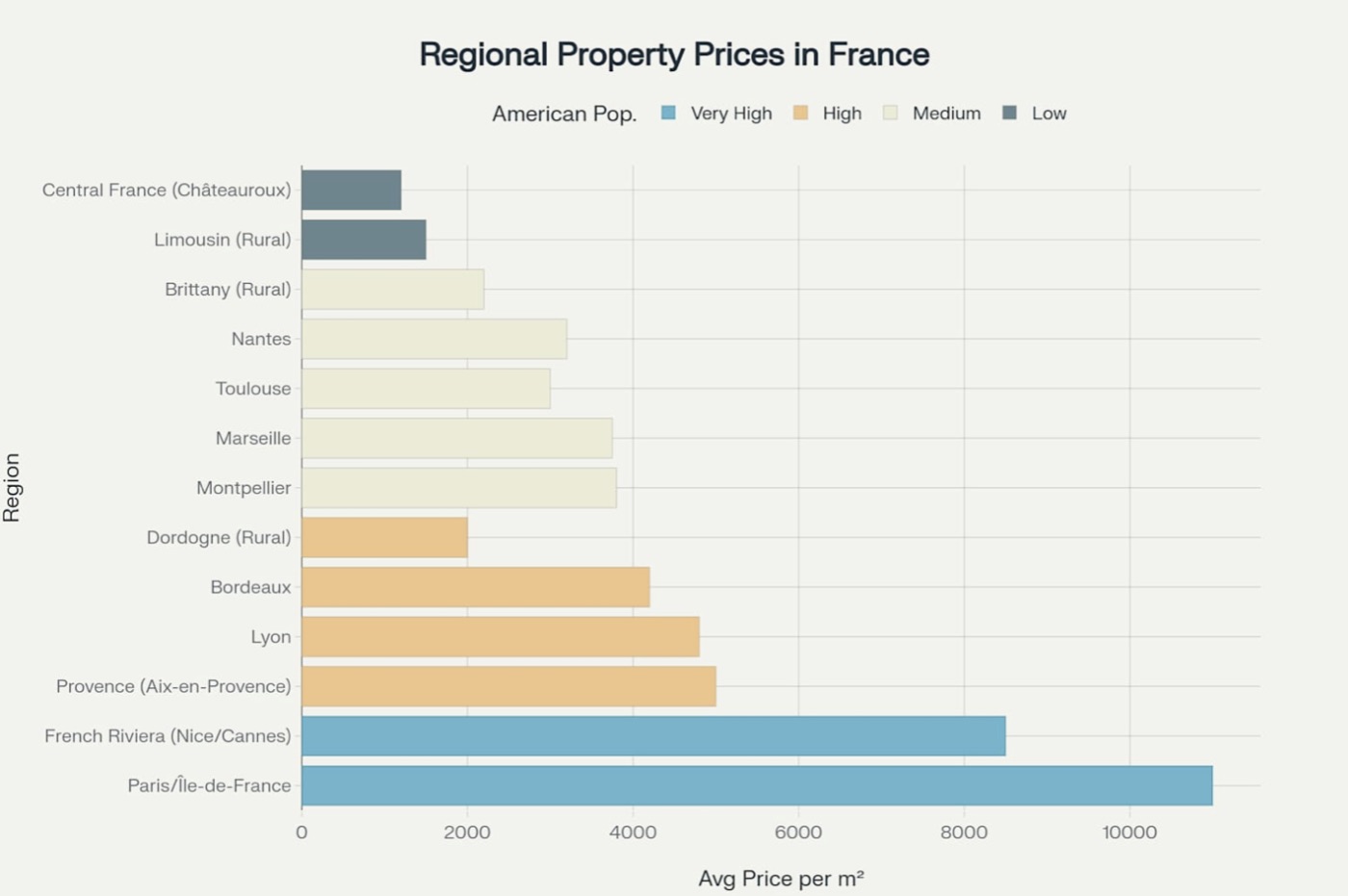
Property price variations across French regions present both opportunities and challenges for American buyers. The data reveals striking disparities, with prices ranging from €1,200 per square meter in Central France to €11,000 per square meter in Paris—a differential of over 800%. Popular expat destinations like the French Riviera command €8,500 per square meter, while emerging areas like Provence offer village properties at €5,000 per square meter.
For Americans with defined budgets, these variations require careful consideration of lifestyle preferences versus financial constraints. The **best places to buy property in France for expats** often command premium prices due to established international communities, English-speaking services, and proximity to transportation hubs.
American Expat Settlement Patterns
Research indicates that where do most American expats live in France follows predictable patterns based on infrastructure and community support. Paris and the Île-de-France region host the largest concentration of Americans in France, with over 8,400 Americans living in Paris itself. The Provence-Alpes-Côte d'Azur region follows with significant populations concentrated in Nice and Marseille areas.
These settlement patterns influence property markets, creating clusters where American buyers compete against each other, potentially driving up prices in desirable locations. Americans must balance the benefits of established expat communities against the premium costs these areas command.
Visa and Residency Pathways
Long-Stay Visa Requirements
The pathway to legal residency begins with understanding **France long-stay visa requirements for US citizens**. Americans planning to spend more than 90 days in France must obtain a long-stay visa (VLS-TS), which requires demonstrating monthly income of at least €1,800 for a single person. This income can derive from pensions, retirement savings, investments, or rental income, but must be verifiable through extensive documentation.
The visa application process involves multiple requirements: valid passport with six months validity, comprehensive health insurance coverage of at least €30,000, proof of accommodation, clean criminal background checks, and declarations of non-employment intent. Processing times typically extend 2-4 months, requiring careful coordination with property purchase timelines.
Integration and Permanent Residency
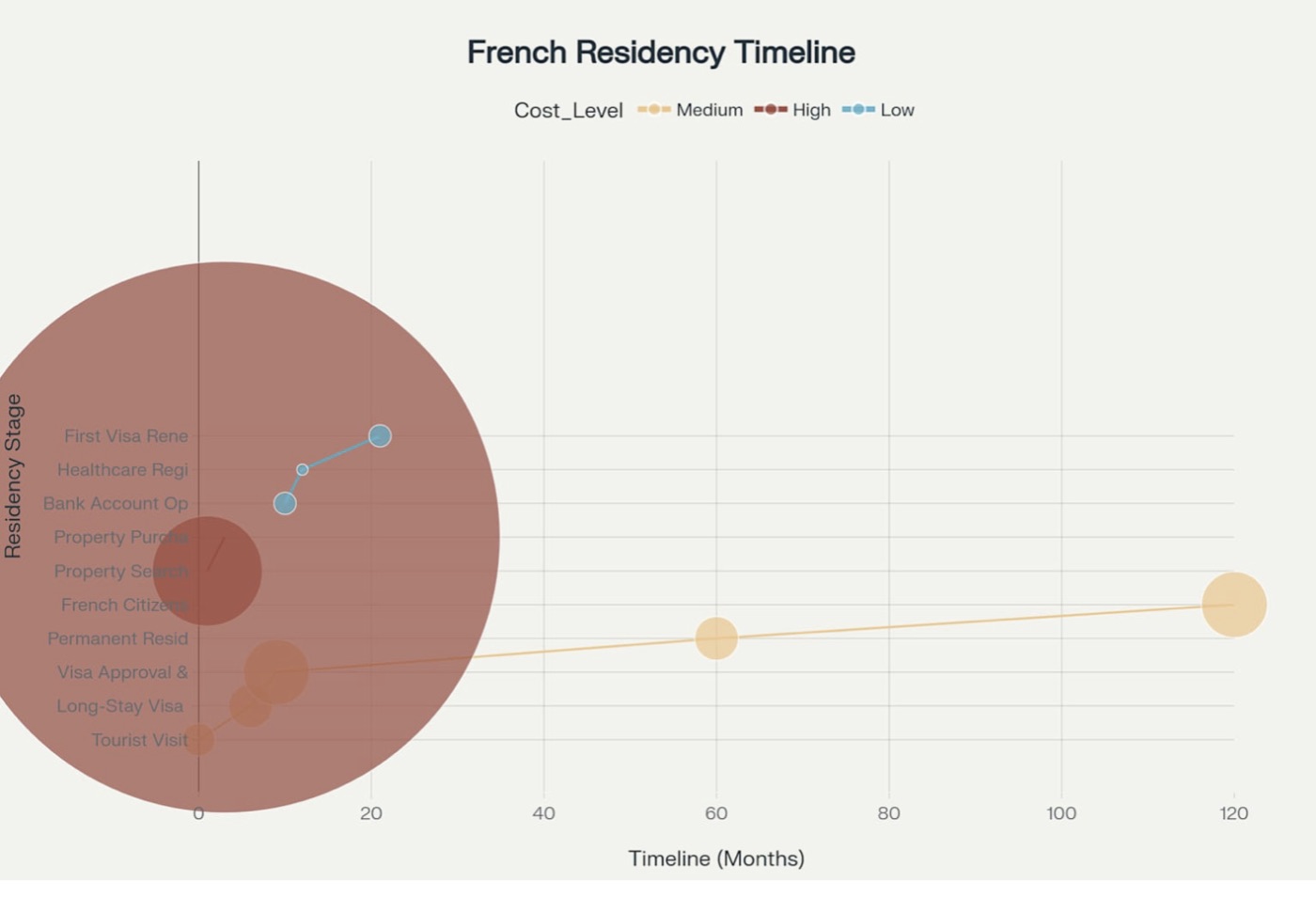
The journey from tourist to permanent resident spans multiple years and stages. After initial visa approval, Americans must validate their visas within three months of arrival through French government portals. Healthcare system access becomes available after three months of continuous residence, while the first visa renewal occurs after one year.
Permanent residency eligibility requires five years of continuous residence, with French citizenship possible after ten years provided applicants demonstrate language proficiency and cultural integration. For Americans planning long-term residence, understanding this timeline becomes crucial for estate planning and tax strategies.
Tax Implications and Compliance Burden
Dual Tax Obligations
Taxes for US expats in France create complex compliance requirements that many Americans underestimate. As U.S. citizens, Americans living in France must file annual U.S. tax returns reporting worldwide income, regardless of their residency status. Simultaneously, French tax residency—triggered by spending more than 183 days annually in France or making it their primary residence—subjects them to French tax obligations on worldwide income.
French tax rates reach 45% for high earners plus social security contributions, while estate and inheritance taxes range from 5% to 60% depending on relationships and amounts. However, the U.S.-France tax treaty provides mechanisms to prevent double taxation through foreign tax credits and income exclusions.
Property-Specific Tax Considerations
Property ownership triggers specific French tax obligations including taxe foncière (property tax) of €500-€2,000 annually and taxe d'habitation for second homes. Capital gains taxes of 19% plus surtaxes apply to property sales, though exemptions exist after 22 years of ownership. Americans must also report rental income to the IRS, requiring professional tax advice to navigate treaty provisions and avoid double taxation.
Healthcare Access and Living Considerations
Healthcare System Integration
Healthcare in France for expats represents one of the system's most attractive features, though access requires patience and proper registration. Americans qualify for the French healthcare system (Protection Universelle Maladie - PUMA) after three months of continuous residence, providing coverage for 70-100% of medical costs.
The registration process requires documentation proving stable and regular residence, including utility bills, lease agreements, and income verification. Americans must obtain a Carte Vitale (health card) and register with a primary physician to maximize reimbursement benefits. For Americans concerned about healthcare costs and access, this system provides significant advantages over U.S. healthcare, though the initial bureaucratic requirements can be daunting.
Cost of Living Considerations
Cost of living in France varies significantly by region, impacting budget planning for property buyers. The French government advises that single individuals need at least €1,800 monthly to live comfortably, with couples requiring €3,600. Housing typically consumes one-third of this budget, with utilities adding another 10% and food costs ranging €300-400 monthly.
Regional variations in living costs can be substantial. Monthly budget for expats in Paris vs. Provence shows dramatic differences, with Paris rental costs averaging €1,392 for one-bedroom apartments compared to €579 in southwestern cities like Pau. These disparities influence not only property purchase decisions but ongoing affordability for those on fixed incomes.
Risk Management and Strategic Recommendations
Market Knowledge Gaps
Risk of overpaying or fraud represents a significant concern for American buyers lacking local market knowledge. Without understanding regional price variations, seasonal market fluctuations, and property condition standards, Americans may pay inflated prices, particularly in competitive markets like Paris or the Riviera.
Scams targeting foreign buyers include fake listings, inflated price quotations, and fraudulent agent representations. Due diligence requirements include verifying property titles, confirming agent credentials, and working with reputable notaires, but these processes can be time-consuming and expensive for remote buyers.
Professional Team Assembly
Success in French property acquisition requires assembling a qualified professional team. Essential team members include English-speaking real estate agents familiar with American buyers, FATCA-compliant French banks, bilingual notaires specializing in international transactions, and international tax advisors understanding both U.S. and French obligations.
Working with professionals experienced in American client needs can significantly reduce transaction complexity and costs. These specialists understand common pitfalls, can expedite bureaucratic processes, and provide guidance on tax optimization strategies.
Financial Planning and Budgeting
Effective budgeting must account for the total cost of ownership beyond the purchase price. Americans should budget an additional 20-30% above the property price for transaction costs, potential renovations, and first-year establishment expenses. This includes notaire fees, diagnostics, insurance, utility deposits, and professional service costs.
Currency exchange planning becomes crucial given the extended transaction timelines. Americans should consider forward contracts or currency hedging strategies to protect against exchange rate fluctuations during the months-long purchase process.
The journey from "move to France from the USA" aspiration to successful property ownership represents a complex undertaking requiring careful planning, substantial financial resources, and professional guidance. Americans possess many advantages in navigating this process—established careers, financial resources, and analytical skills—yet they face unique challenges stemming from their citizenship, unfamiliarity with French systems, and the inherent complexity of international real estate transactions.
The financial impact of these challenges can be substantial, with total additional costs potentially reaching 20-30% above anticipated purchase prices. However, for those who successfully navigate the process, French property ownership offers significant rewards: access to one of the world's finest healthcare systems, stable property values, rich cultural experiences, and potential pathways to European residency and citizenship.
Success requires realistic budgeting, professional guidance, patience with bureaucratic processes, and thorough research into regional markets and regulatory requirements. Americans who approach the French property market with proper preparation and realistic expectations can achieve their goals while avoiding the common pitfalls that trap less-prepared buyers.
The key lies in understanding that buying property in France represents not just a real estate transaction but a comprehensive lifestyle change requiring careful planning across multiple domains: financial, legal, tax, healthcare, and cultural integration. Those who embrace this complexity and plan accordingly will find themselves well-positioned to enjoy the substantial benefits of French property ownership and residency.